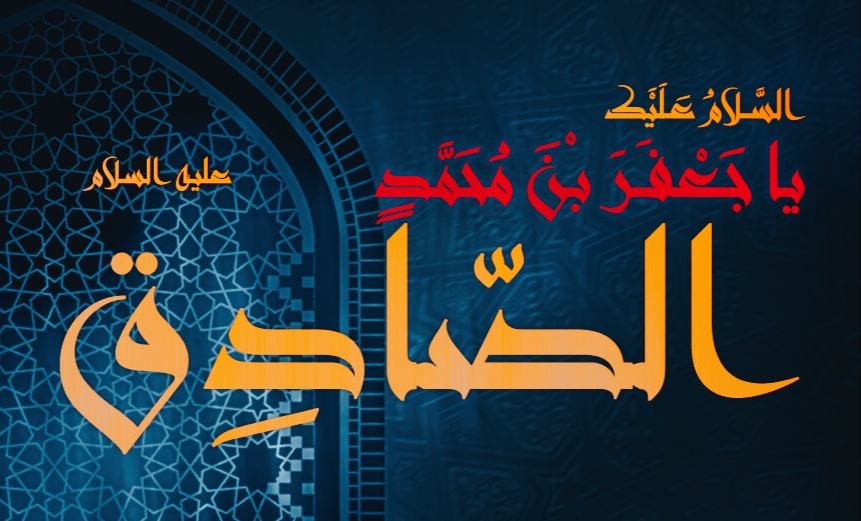
The Martyrdom of Imam Ja‘far al-Sadiq
The 25th of the month of Shawwal according to the Hijri lunar calendar (this year corresponding to April 14 in the Gregorian calendar) marks the day of the martyrdom of Imam Ja‘far al-Sadiq. He is regarded as one of the greatest intellectuals of the Islamic world and the Imam of his time, a remarkable figure who rose through knowledge and wisdom.
Imam Ja‘far al-Sadiq was born on the 17th of Rabi‘ al-Awwal in the year 83 AH (approximately 702 CE) in the city of Medina. His birth holds special spiritual significance, as it coincides with the birth of the Prophet Muhammad.
He was martyred on the 25th of Shawwal 148 AH (765 CE), also in Medina. According to historical sources, he was poisoned on the order of the Abbasid caliph al-Mansur.
Imam Ja‘far al-Sadiq played an exceptional role in the development of Islamic sciences, establishing the first systematic educational institution and training thousands of students. His disciples significantly influenced the formation of Islamic thought in jurisprudence, theology, exegesis, hadith studies, and philosophy.
Throughout his life, he sought to convey the true message of Islam, free from sectarian divisions and later ideological distortions. His primary aim was to preserve the authentic teachings of the Qur’an and Sunnah for future generations.
Historically, the political conditions of the Abbasid era contributed to the emergence of various intellectual and religious movements within the Muslim community. Against this backdrop, the teachings of Imam Ja‘far al-Sadiq, rooted in the Qur’an and Sunnah, later became known as the Ja‘fari school.
Today, on the anniversary of his martyrdom, his intellectual legacy, spiritual struggle, and service to preserving the authentic essence of Islam are once again honored. His school of thought remains a significant source of Islamic intellectual tradition.